Grow Lights for Propagation: What Actually Matters
 Reviewed by
 Grow lights get sold as essential, complete with scary spec sheets. For most cuttings they're optional — and when you do buy, only two numbers actually matter.
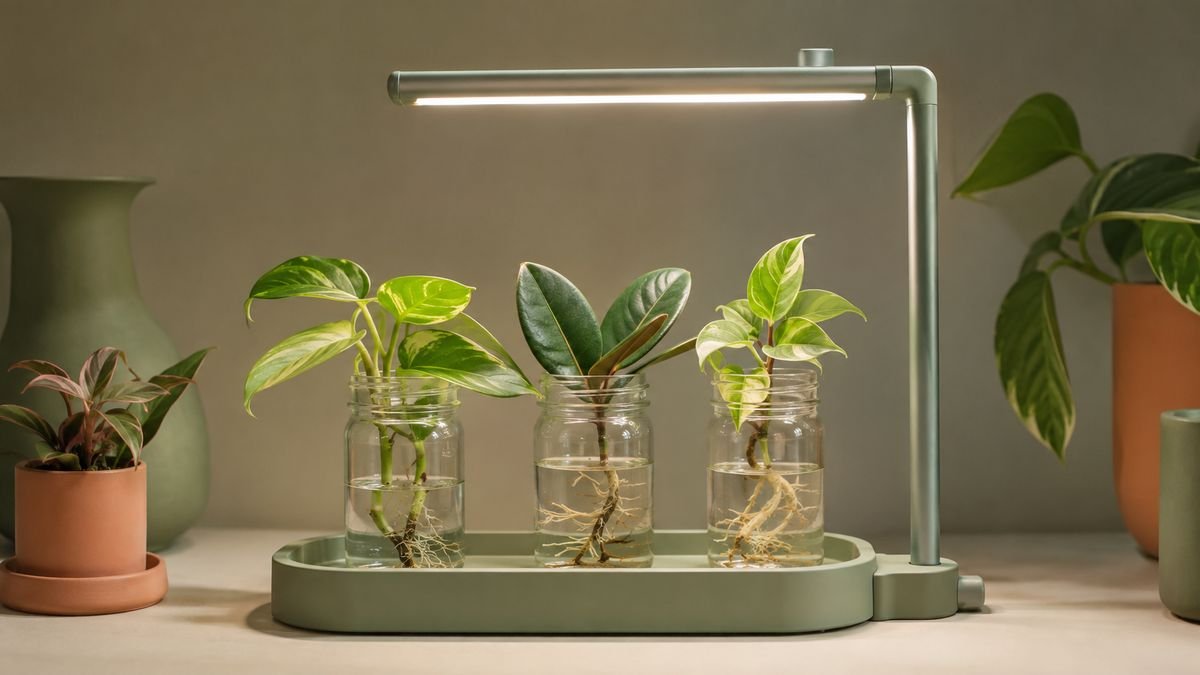
Grow lights get marketed as essential propagation gear, complete with intimidating spec sheets. For most people rooting a few cuttings, they're completely optional. But there are real situations where one helps — and when you do buy, only two numbers actually matter. Here's the no-jargon version.
Do you even need one?
Honestly, probably not. A cutting doesn't need much light to root — it's growing roots, not powering heavy new growth. A spot near a bright window with plenty of indirect daylight is enough for the vast majority of cuttings, exactly as described in our water propagation walkthrough. If you have a decent windowsill, save your money.
When a grow light helps
- Dark rooms or no good window. If your space is genuinely dim, a light fills the gap.
- Winter. Short, gloomy days slow rooting; a grow light keeps things moving through the cold months.
- Big batches. Propagating dozens of cuttings at once often means shelves away from windows, where a light helps.
- Leggy, stretching cuttings. If new growth is pale and reaching, it wants more light than the window provides.
The two specs that matter
Ignore most of the marketing. For propagation, two things count:
1. Light colour (spectrum). Look for a "full spectrum" LED or a colour temperature around 5000–6500K, which mimics bright daylight. That's all the spectrum detail you need — you don't have to decode nanometre charts.
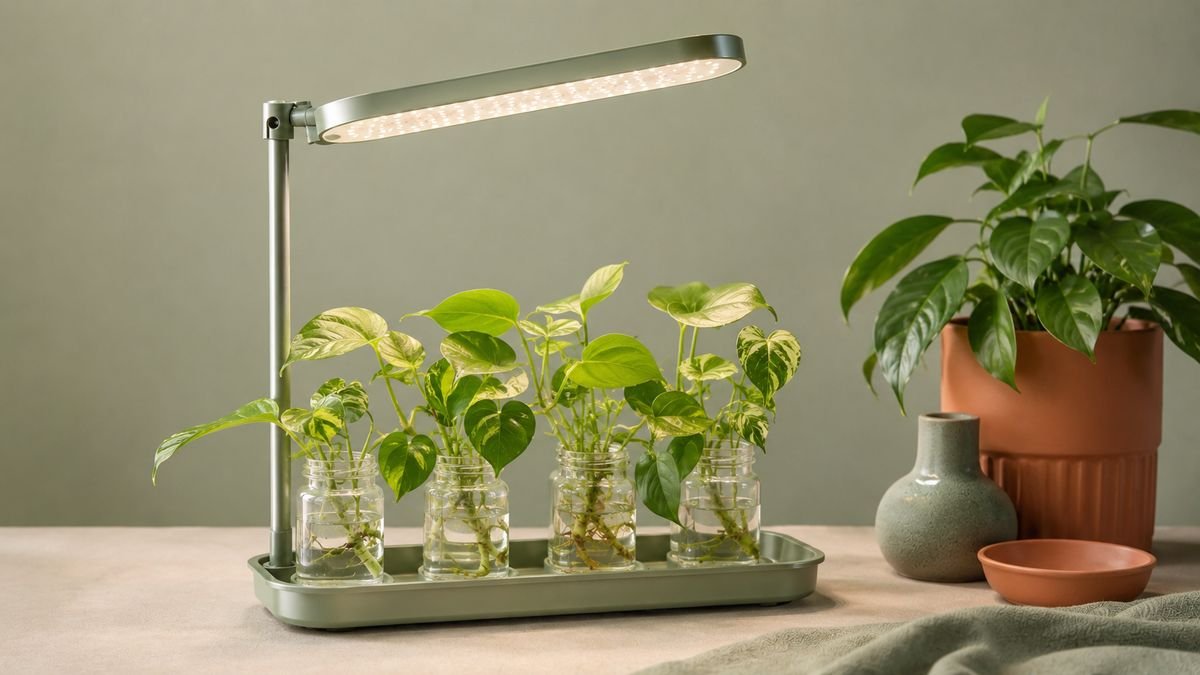
2. Distance and intensity. How bright the light is at the plant matters more than the wattage on the box. As a simple rule, keep a small LED roughly 15–30cm above the cuttings. Too far and it does little; too close and you can scorch leaves. Adjust by watching the cuttings.
What to ignore
Skip the wattage arms race — a huge wattage number doesn't mean better results for a few cuttings, just a bigger electricity bill. You also don't need blurple (purple) lights, fancy timers with dozens of modes, or anything sold as a "professional grow system" to root a pothos. A modest, full-spectrum LED clip light does everything a home propagator needs.
Positioning and hours
Position it close but safe
Aim for roughly 15–30cm above the cuttings, adjusting if leaves pale (too far) or scorch (too close).
Run it 12–14 hours a day
Cuttings don't need round-the-clock light. Twelve to fourteen hours mimics a good long day. A cheap plug timer automates it.
Watch the cuttings, not the numbers
Healthy green growth means it's right. Pale, stretching growth means more light; scorched edges mean back it off.
Common questions
Do I need a grow light to propagate cuttings?
Usually not. A bright, indirect windowsill is enough for most cuttings. Grow lights help in dark rooms, in winter, or for big batches away from windows.
What kind of grow light is best for propagation?
A modest full-spectrum LED around 5000–6500K. You don't need high wattage or a professional system to root cuttings.
How far should a grow light be from cuttings?
Roughly 15–30cm for a small LED. Move it further if leaves scorch, closer if growth is pale and stretching.
How many hours a day should the light be on?
Twelve to fourteen hours mimics a long day and is plenty. A cheap plug timer makes it effortless.