Air Layering for Houseplants (When Cuttings Won't Work)
 Reviewed by
 For woody stems and prized plants that refuse to root as cuttings, air layering grows roots while the stem is still attached — so the new plant is established before you ever cut it free.
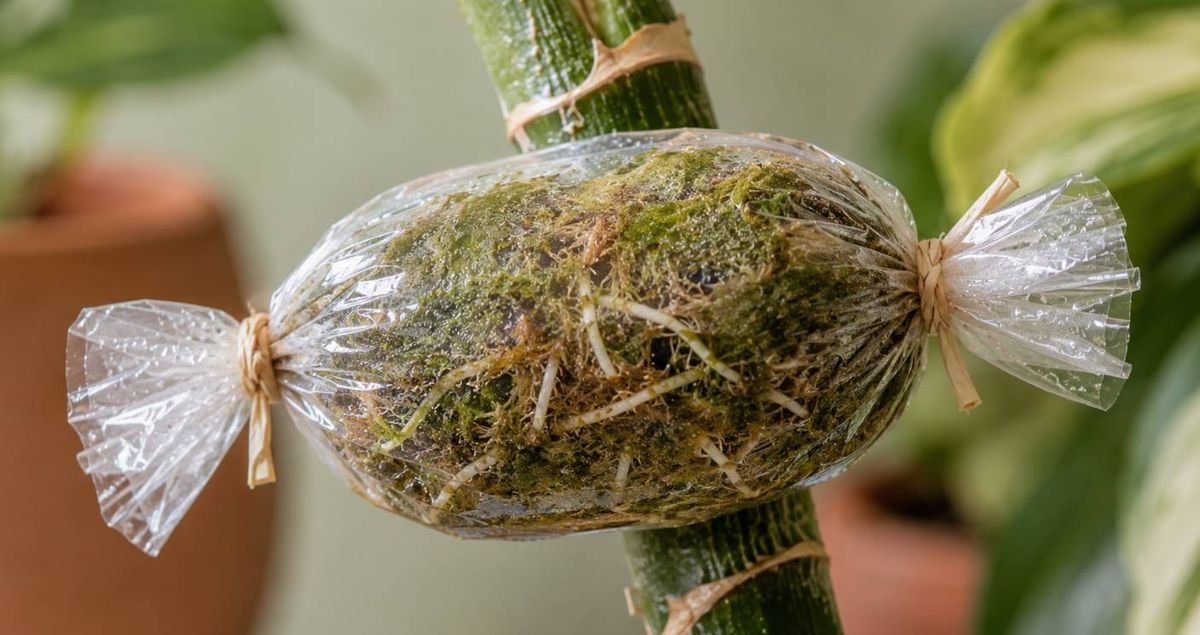
Some plants stubbornly refuse to root as ordinary cuttings — woody stems, leggy trunks, prized specimens you daren't chop into. Air layering is the clever answer: you make the stem grow roots while it's still attached to the parent plant, so the new plant is already established before you ever cut it free. It looks advanced, but the logic is simple and the success rate is high.
What air layering is
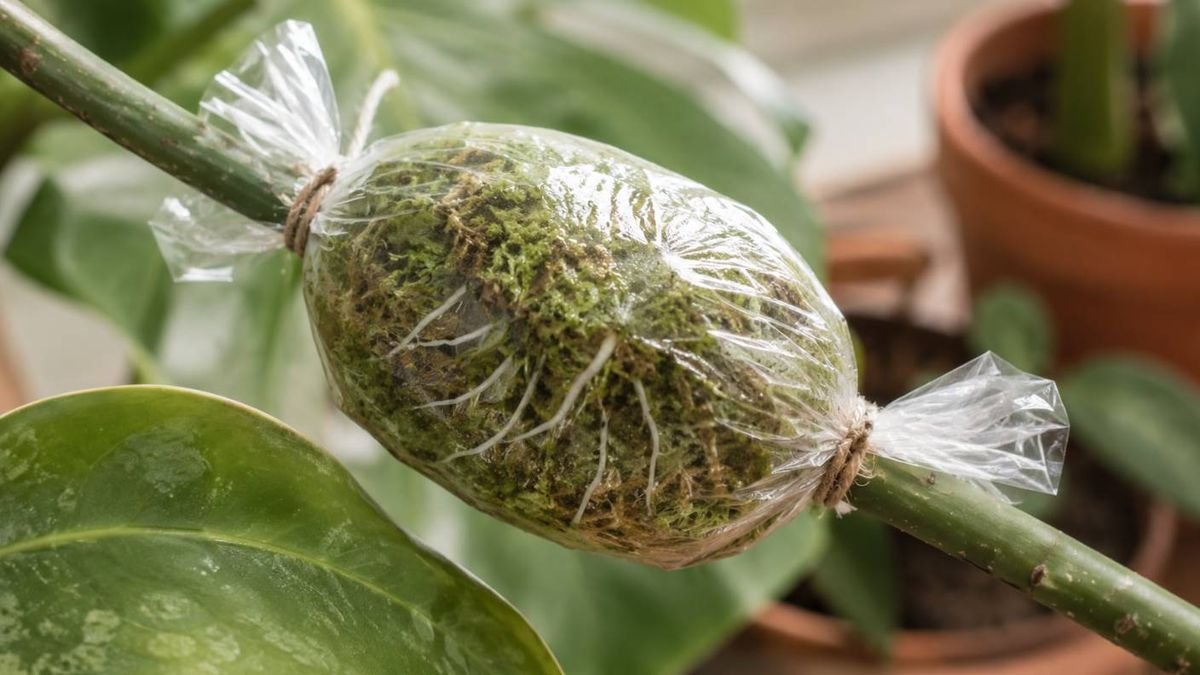
Instead of cutting a stem off and hoping it roots, you wound a section of stem, wrap it in moist sphagnum moss, and seal it in plastic. The plant, still fed by its own roots, pushes new roots out into that pocket of moss. Once a healthy root ball has formed inside the wrap, you cut below it — and you've got a fully rooted new plant with zero rooting-in-a-jar gamble. Because the parent keeps supplying energy the whole time, there's no wilting, no rot race, and no anxious weeks wondering if a bare cutting will make it.
When to reach for it
Air layering shines in exactly the situations where a jar of water lets you down:
- Woody or thick stems that won't root as cuttings — rubber plants, fiddle leaf figs, crotons.
- Leggy plants that have dropped their lower leaves. You can air-layer near the top and end up with a compact, full plant.
- Prized or single specimens where a failed cutting would be heartbreaking. The parent stays intact until roots are guaranteed.
For soft, easy trailing plants like pothos, air layering is overkill — a simple water cutting is faster. Save this method for the plants that fight back.
What you'll need
- Damp sphagnum moss — soaked and wrung out so it's moist, not dripping.
- Clear plastic wrap or a cut sandwich bag — clear so you can watch for roots.
- Twist ties or string to seal both ends.
- A clean, sharp knife. Rooting hormone is optional and can help on very woody stems.
Air layering, step by step
Choose a healthy stem section
Pick a firm stem, ideally just below a node. Aim for a spot that will give you a nicely shaped new plant once separated.
Wound the stem
Make a shallow upward cut partway through, or scrape a thin ring of the outer bark away. This interrupts the flow and signals the plant to root there. A dab of rooting hormone on the wound helps on woody plants.
Wrap with damp moss
Pack a generous handful of moist sphagnum moss around the wound so it fully surrounds the stem.
Seal it in plastic
Wrap clear plastic around the moss ball and tie both ends snugly. You want it sealed enough to hold moisture but able to be reopened to check or re-moisten.
Wait and keep it moist
Over several weeks, roots grow into the moss. If it dries out, unwrap, moisten, and reseal. Bright indirect light keeps the parent strong.
Cut and pot up
Once you can see a solid network of roots through the plastic, cut the stem just below the moss ball, remove the plastic, and pot the whole rooted section — moss and all — into a light mix.
Plants it works best on
| Plant | Why air layer |
|---|---|
| Rubber plant | Woody stem, hard to root as a cutting |
| Fiddle leaf fig | Notoriously slow from cuttings; layering is more reliable |
| Croton | Woody and rot-prone in water |
| Dumb cane (dieffenbachia) | Great for reviving a leggy trunk |
| Monstera (large) | Optional for big specimens with aerial roots |
The fiddle leaf fig is the classic case — many people who struggle to root it from a cutting succeed easily by air layering. If you want to try both, our honest fiddle leaf fig guide compares the odds.
Common questions
Is air layering hard?
It looks technical but the steps are simple: wound the stem, wrap in damp moss, seal in plastic, wait. The main skill is patience and keeping the moss moist.
How long does air layering take?
Usually six to ten weeks for woody plants, sometimes longer. You cut the stem free only once you can see a solid network of roots through the plastic.
Do I need rooting hormone?
It's optional. On soft stems it makes little difference, but a dab on the wound of a woody plant like a rubber plant or fiddle leaf fig can speed things up.
Can I air layer any plant?
It works best on plants with woody or thick stems that root poorly as cuttings. Soft trailing plants root faster in water, so layering isn't worth the effort for them.