How to Propagate Plants from a Single Leaf
 Reviewed by
 For a specific group of houseplants, one leaf is all you need to grow a whole new plant. Here's which plants do it, the two methods, and how to keep them from rotting while they work.
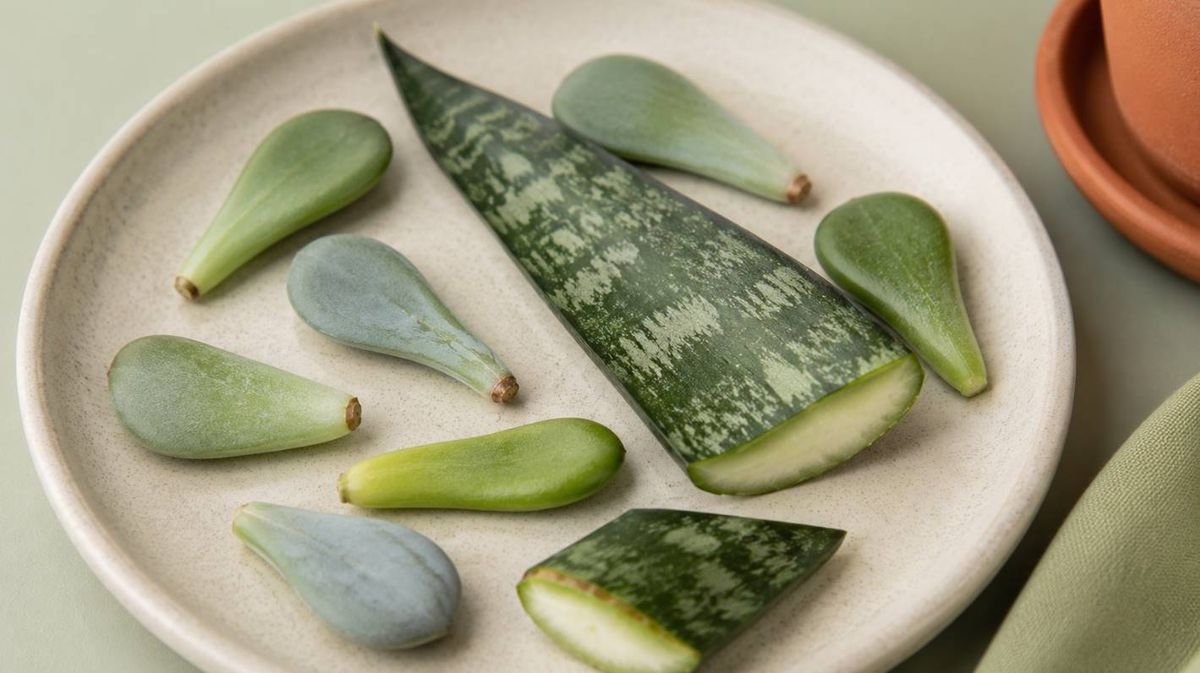
Growing an entire new plant from a single leaf feels like a party trick, and for a specific set of houseplants it genuinely works. The catch is that it only works for those plants — try it with a pothos leaf and you'll get roots but never a new plant. Here's how to tell which is which, and exactly what to do.
Which plants grow from a leaf
The plants that propagate from leaves share a useful trait: their leaves can generate a whole new growing point. These are the reliable ones.
| Plant | Leaf method | New plant in |
|---|---|---|
| Succulents (echeveria, etc.) | Whole leaf | 3–6 weeks |
| Snake plant | Leaf sections | 4–8 weeks |
| African violet | Whole leaf + stalk | 4–8 weeks |
| Begonia (rex) | Leaf sections | 6–10 weeks |
| Peperomia | Whole leaf + stalk | 4–8 weeks |
| ZZ plant | Whole leaf | Several months |
Notice what's missing: pothos, monstera, philodendron. Those need a node on a stem, so a lone leaf won't cut it. For those, use a stem cutting instead.
Why it even works
Leaves that can propagate contain pockets of undifferentiated cells capable of becoming roots and a new shoot. Give the leaf light, a little moisture and time, and those cells wake up: first roots, then a tiny plantlet at the base. The original leaf slowly feeds the baby and eventually withers away once the new plant can support itself. That last part surprises people — the parent leaf is meant to shrivel, and it's not a sign of failure.
The two leaf methods
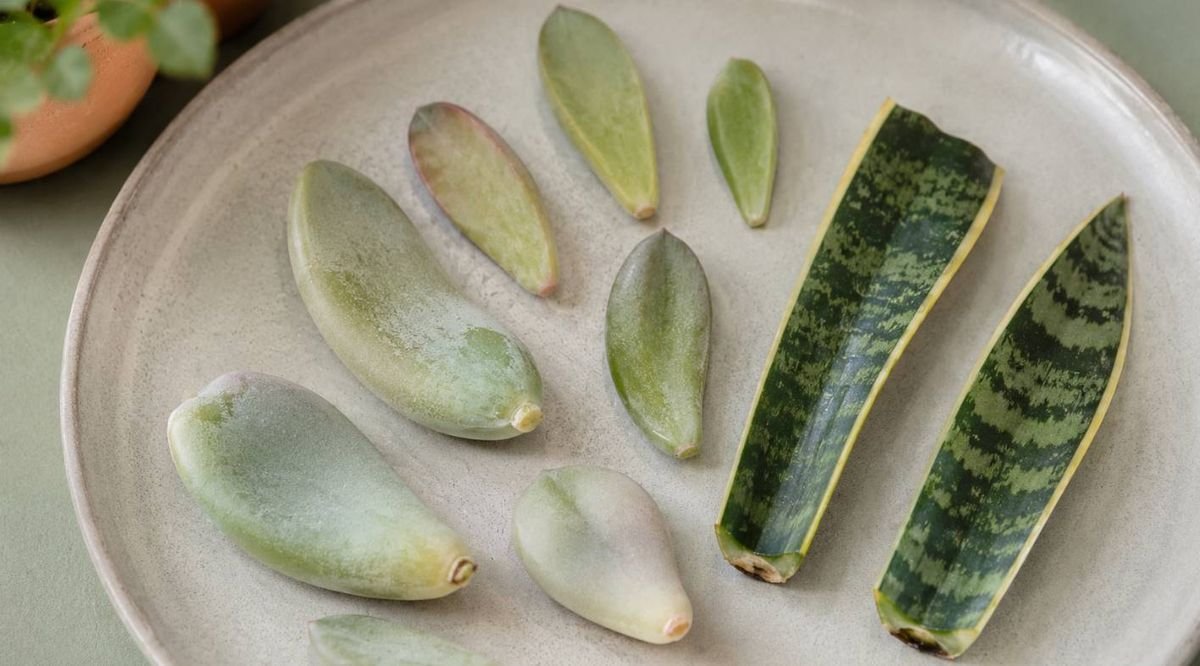
There are really just two approaches, and which you use depends on the plant:
- Whole leaf. For succulents, ZZ, African violet and peperomia — you use the entire leaf (with its little stalk where relevant).
- Leaf sections. For snake plant and rex begonia — you cut one leaf into several pieces, and each piece can produce a plantlet.
Whole-leaf method, step by step
This is the classic succulent method, and it's almost foolproof if you're patient.
Remove a healthy leaf cleanly
Gently twist a plump, undamaged leaf off so it comes away whole with its base intact. A torn base won't sprout.
Let it callus for a day or two
Set the leaf aside in a dry, shaded spot until the cut end dries and seals over. Skipping this is the top cause of rot.
Lay it on a light mix
Rest the leaf on top of a moist, gritty propagation mix — you don't bury it. Bright indirect light, no direct sun.
Mist, don't drench
A light misting every few days keeps things moist enough. Soggy soil rots leaves fast.
Wait for roots, then a pup
Tiny roots appear first, then a miniature plant at the base. Once the pup has its own small roots, pot it up and let the old leaf fade.
Leaf-section method
Snake plants and rex begonias take a twist on the same idea. Cut a healthy leaf into two-to-three-inch sections (keep track of which end pointed down — sections only root from the original bottom edge). Let the cuts callus, then stand each section upright in moist mix, bottom-down. Each piece can push out roots and eventually a pup. It's slow, but very reliable. Our dedicated snake plant propagation guide goes deeper on the timing and the one quirk to know about variegated varieties.
Mistakes to avoid
- Skipping the callus step. A fresh, wet cut end sitting on damp soil is a recipe for rot. Let it dry first.
- Burying the leaf. Whole leaves rest on top of the mix, not under it.
- Flipping sections upside down. Leaf sections only root from the end that was originally lowest. Mark it before you cut.
- Giving up too soon. Leaf propagation is genuinely slow. A leaf can sit for weeks doing nothing visible before it roots.
If leaves keep going soft and translucent, that's rot — and our guide on why cuttings rot applies here too. For a full patience chart across plants, see how long propagation takes.
Common questions
Can any plant grow from a single leaf?
No. Only plants whose leaves can form a new growing point — succulents, snake plant, African violet, begonia, peperomia and a few others. Plants that root only from stem nodes, like pothos and monstera, need a stem cutting instead.
Why did my leaf grow roots but no plant?
Some leaves (notably certain succulents and pothos) will root but never form a shoot, so they stay a rooted leaf forever. Stick to the plants in the table above for a full new plant.
Should I use water or soil for leaves?
Succulents strongly prefer resting on soil. Snake plant sections work in either. In all cases, let the cut end callus first and keep moisture gentle.
The original leaf is shrivelling — did I fail?
Usually the opposite. The parent leaf feeds the new pup and naturally withers once the baby can stand alone. As long as the pup looks healthy, you're on track.