How to Propagate Snake Plants (And Why It's Slow)
 Reviewed by
 Snake plants root reliably but on their own slow schedule. Here are the three methods, plus the variegation catch that trips people up with yellow-edged varieties.
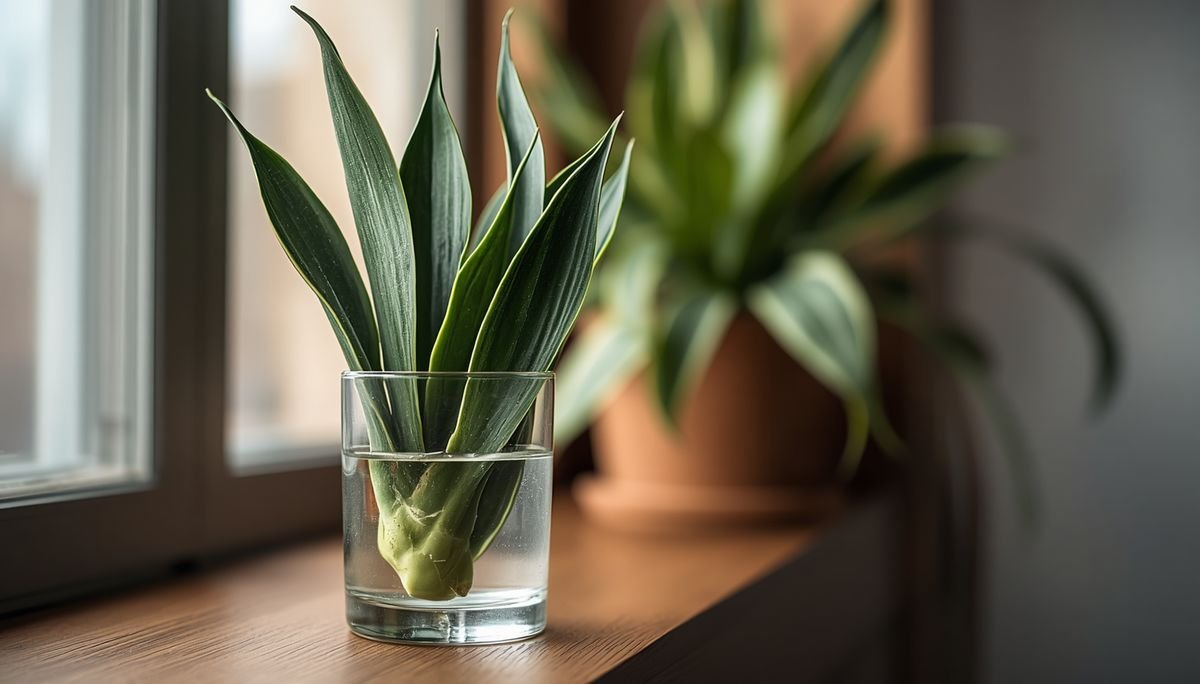
Snake plants are nearly indestructible, which makes them a great houseplant and a slightly frustrating one to propagate — they take their sweet time. The good news is that the methods are simple and the success rate is high once you accept the timeline. Here's how to do it, plus one catch that surprises people with variegated varieties.
Why snake plants are slow
Snake plants grow from thick underground rhizomes and store water in their stiff leaves, so they're in no hurry to do anything — including root. A leaf cutting can sit for weeks looking exactly the same before roots finally appear, followed even later by a tiny pup. This isn't failure; it's just how they work. Patience is genuinely part of the method, so set the cutting somewhere you'll see it and then mostly forget about it.
Three ways to do it
- Leaf cuttings in water — cut a leaf into sections and root them in a jar. Slow but you can watch.
- Leaf cuttings in soil — the same sections stood upright in a light mix. Slightly sturdier roots.
- Division — split the rhizome for instant, fully rooted plants. By far the fastest.

Leaf cuttings, step by step
Cut a healthy leaf into sections
Slice a firm leaf into two-to-three-inch pieces. Crucially, keep track of which end pointed down — sections only root from the original bottom edge.
Let the cuts callus
Leave the sections in a dry spot for a day or two so the cut ends dry and seal. This prevents rot in the next step.
Stand them bottom-down
Place each section, correct end down, in a jar of shallow water or upright in a light mix. Bright indirect light.
Wait — really wait
Change the water every few days if rooting in water. Roots appear in four to eight weeks; a pup follows later still. This is the patience method.
Pot up the pup
Once a small plantlet with its own roots has formed, pot it into a light, free-draining mix.
The variegation catch
Here's the surprise. If your snake plant has yellow-edged or otherwise variegated leaves, leaf cuttings will root and grow — but the pups usually come back plain green, losing the variegation entirely. That's because the variegation lives in specific tissue that leaf propagation doesn't reliably pass on. If you want to keep those beautiful yellow edges, divide the plant instead — division carries the variegation because each piece is part of the original plant, not a regrown pup.
Division: the fast option
Division sidesteps the whole waiting game. Because snake plants clump up over time, you can slide the plant out of its pot, separate the rhizomes so each section keeps roots and leaves, and repot them straight away — no rooting period at all. It's the quickest route to more snake plants and the only one that preserves variegation. Our full division propagation guide walks through it gently, step by step.
Common questions
How long does a snake plant take to propagate?
From a leaf cutting, four to eight weeks for roots and longer still for a pup. Division is instant since each piece already has roots. Patience is essential with the leaf method.
Why won't my snake plant cutting root?
Usually it's just slow, not failed — give it more time. Check the section is bottom-down (they only root from the original lower end) and that the water is fresh or the soil isn't soggy.
Will leaf cuttings keep the yellow variegation?
No. Variegated snake plants revert to plain green from leaf cuttings. Divide the plant instead to keep the variegation.
Water or soil for snake plant cuttings?
Either works. Water lets you watch and is beginner-friendly; soil gives slightly sturdier roots. In both, let the cut end callus first and keep moisture gentle.