Division Propagation: Splitting Plants Without Killing Them
 Reviewed by
 No jars, no waiting for roots — division separates a clumping plant into ready-made plants that already have their own roots. It's the fastest, most reliable method there is.
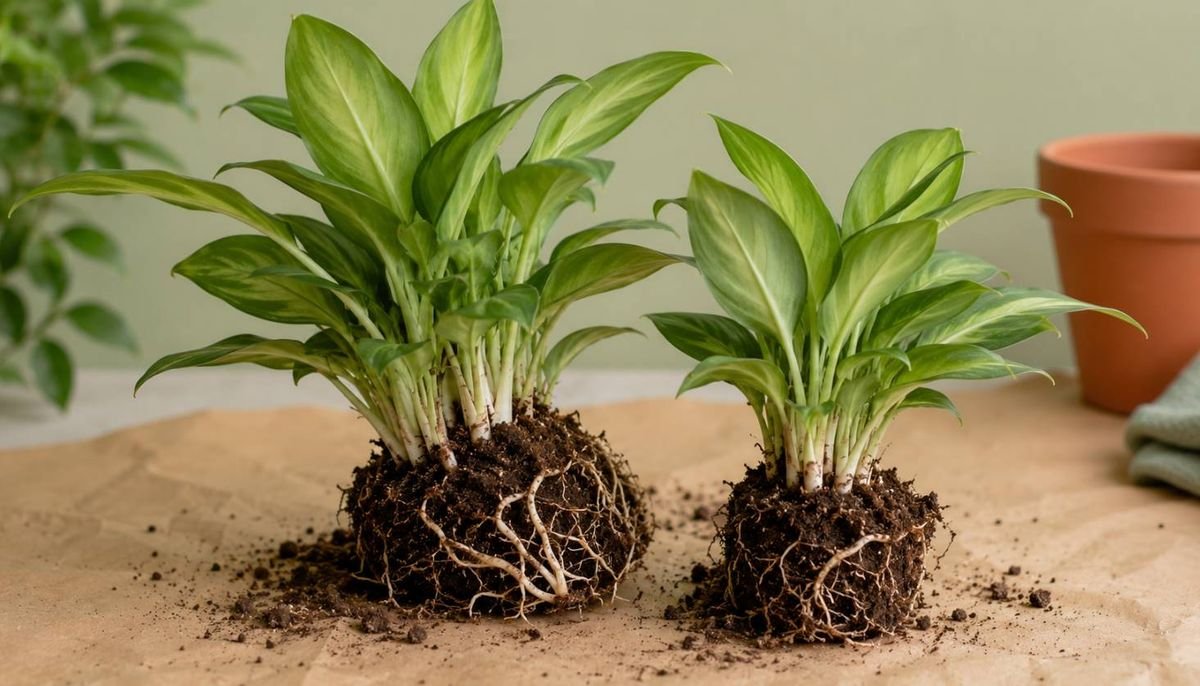
Division is the fastest propagation method there is, and the one most beginners overlook. Instead of waiting weeks for roots to form, you take a plant that has quietly grown into a clump of several plants and simply separate them — each piece already has its own roots and is ready to go. Done gently, you get two mature plants in ten minutes.
What division actually is
Many houseplants don't grow as one single stem — they spread by producing new shoots from the base, forming a dense clump over time. Division just means separating that clump into pieces, each with roots and leaves attached. Because every division is already a complete little plant, there's no rooting period and no transplant guessing. It's less "propagation" and more "sharing what's already there".
Which plants divide well
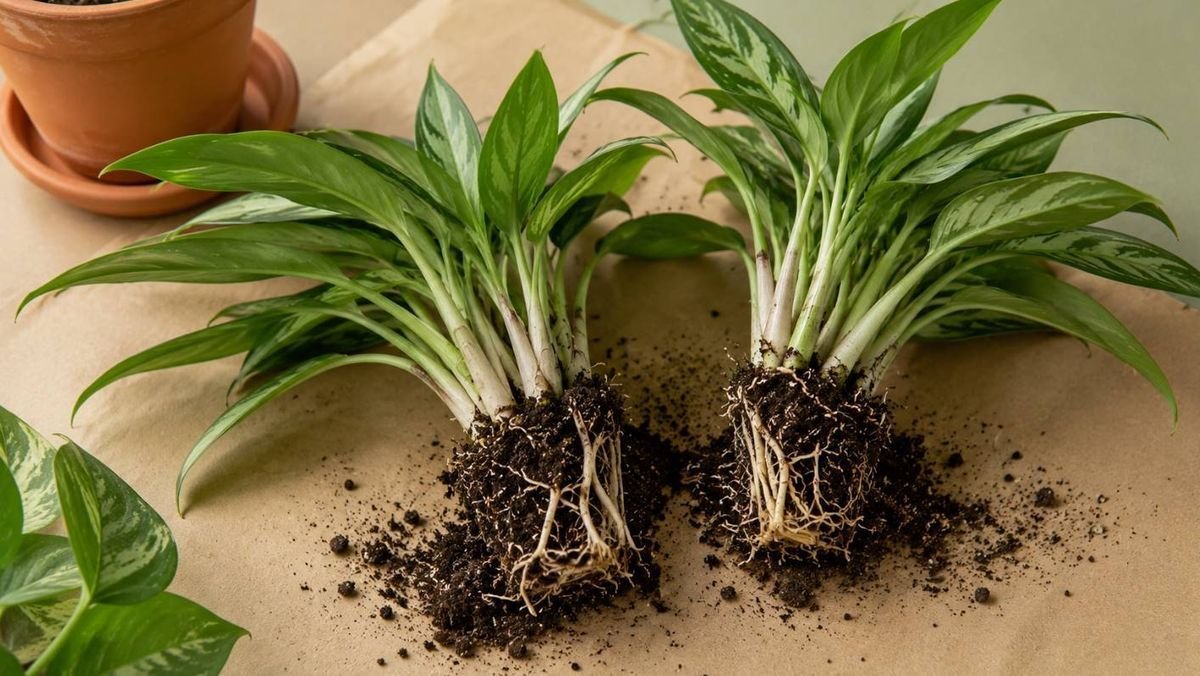
If a plant grows in a clump or sends up multiple stems from the soil, it's probably a good candidate.
| Plant | Divides well? | Notes |
|---|---|---|
| Snake plant | Excellent | Separate rhizomes with roots |
| ZZ plant | Excellent | Split the potato-like rhizomes |
| Peace lily | Excellent | Pulls apart into crowns |
| Calathea / prayer plant | Good | Tease apart gently |
| Spider plant | Good | Or use the plantlets instead |
| Boston fern | Good | Cut the root ball into wedges |
| Pothos, monstera | No | Vining — take stem cuttings |
Snake plants and ZZ plants are the two most satisfying to divide because their thick underground rhizomes pull apart cleanly. If you'd rather propagate those from leaves instead, see our snake plant and ZZ plant guides.
How to divide a plant, step by step
Water the day before
A hydrated plant handles the disturbance far better than a bone-dry one. Water it a day ahead so it's plump but not soggy.
Ease the plant out of its pot
Tip the pot and slide the whole root ball out. Squeezing a flexible plastic pot helps release it without yanking the stems.
Find the natural divisions
Loosen the soil around the roots with your fingers and look for where the clump separates into distinct crowns or rhizomes. Follow those natural seams.
Separate — pull or cut
Many clumps pull apart by hand. For tougher, tangled roots or thick rhizomes, use a clean knife to cut between sections. Make sure every piece keeps both roots and leaves.
Repot each division
Pot each piece into its own container with fresh mix, at the same depth it sat before. Firm the soil gently and water it in.
When not to divide
Division only works on plants that grow as clumps. A single-stem plant — a young monstera, a fiddle leaf fig, a rubber plant — can't be split without simply chopping it in half, which isn't the same thing and usually harms it. For those, take a stem cutting and root it the normal way. And even with clumping plants, don't divide a stressed, sick, or newly bought plant; wait until it's settled and actively growing.
Aftercare
Freshly divided plants have had their roots disturbed, so treat them gently for a couple of weeks. Keep them out of harsh direct sun, keep the soil lightly moist, and hold off on fertiliser until you see new growth. A little droop in the first few days is normal — the same transplant shock a potted-up cutting shows. If a division is slow to perk up, our roots-not-growing checklist helps you rule out the usual culprits.
Common questions
Will division hurt the parent plant?
Not if it's done gently on a clumping plant. You're separating pieces that were already semi-independent. Water beforehand, keep roots on every piece, and both halves recover quickly.
Do I need to let divisions root before potting?
No — that's the beauty of division. Each piece already has roots, so you pot them straight up. There's no water or soil rooting stage.
How many pieces can I split one plant into?
As many as have their own roots and a few leaves. Don't over-divide into tiny fragments, though — bigger divisions establish faster and look better sooner.
Can I divide any houseplant?
Only clumping ones like snake plant, ZZ, peace lily and calathea. Single-stem and vining plants such as monstera and pothos should be propagated from stem cuttings instead — start with our water propagation walkthrough.