Philodendron Propagation: A Genus Cheat Sheet
 Reviewed by
 Most philodendrons propagate the exact same way, so learn it once and you can multiply almost any variety. Here's the quick reference — and the one type that plays by different rules.
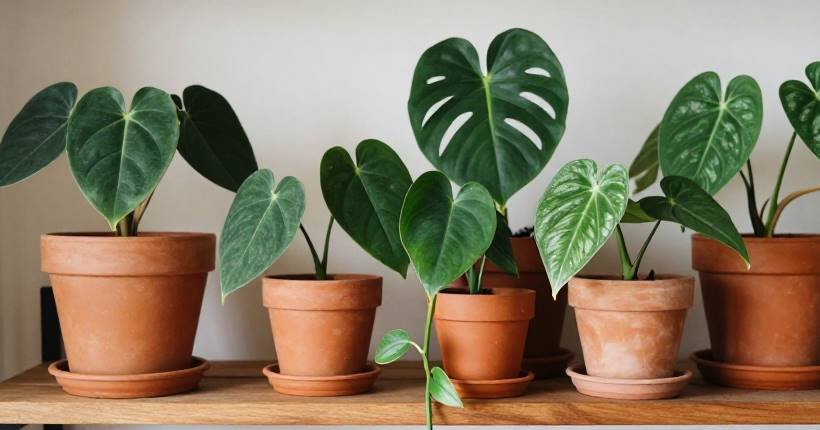
Philodendrons are one of the friendliest groups of houseplants to propagate, and the best part is that most of them work exactly the same way. Learn the method once and you can multiply a heartleaf, a brasil, a micans or a birkin with the same few steps. Here's the quick reference to keep handy.
One method for (almost) the whole genus
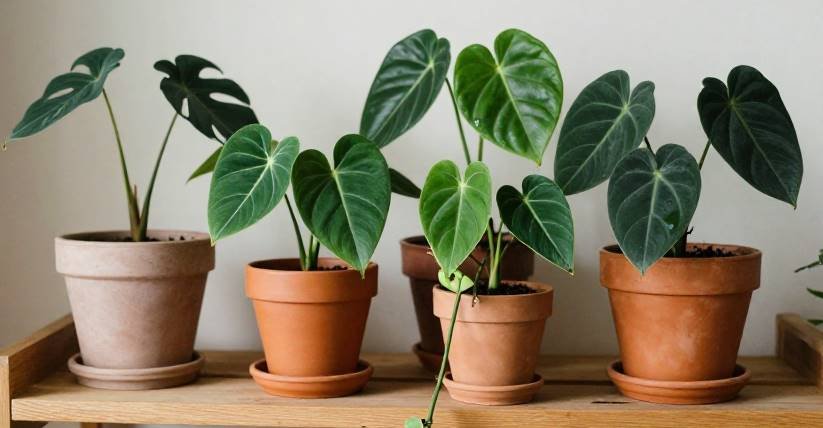
The vast majority of philodendrons are vining or trailing, and they all propagate from a stem cutting with a node — just like their close cousin the pothos. Find a node, cut below it, root it in water or soil, and you're done. Because the method is so consistent across varieties, philodendrons are a brilliant genus to build confidence on: master one, and you've mastered most.
The variety cheat sheet
| Variety | Type | Method |
|---|---|---|
| Heartleaf | Vining | Node cutting (very easy) |
| Brasil | Vining | Node cutting (very easy) |
| Micans | Vining | Node cutting (easy) |
| Birkin | Self-heading | Division or basal offsets |
| Pink Princess | Vining | Node cutting (keep variegation in mind) |
| Congo / Imperial | Self-heading | Division or offsets |
Node cutting, step by step
Find a node
Locate the bump where a leaf meets the stem; many philodendrons show small aerial root nubs there too.
Cut below it
Snip cleanly about a centimetre under the node, keeping a leaf or two on the cutting.
Root in water or soil
Submerge the node in a jar (leaves above water) or insert it into a light mix. Bright indirect light.
Refresh and wait
Change water every few days; roots appear in one to two weeks for the easy vining types.
Pot up
Once roots are one to two inches, pot into a light mix, planting a few cuttings together for a full look.
Vining vs self-heading types
Here's the one wrinkle. A minority of philodendrons — birkin, congo, imperial and similar — are self-heading: they grow as a compact clump rather than a trailing vine, so there's no long stem to take node cuttings from. For these, you can't propagate the same way. Instead, wait for basal offsets (baby plants at the base) or divide the clump at repotting time. If your philodendron trails, take cuttings; if it clumps upright, divide it.
Water or soil?
Vining philodendrons root beautifully either way. Water is the classic beginner choice and lets you watch; soil skips the transition. It genuinely doesn't matter much for this easygoing genus — our soil vs water comparison covers the finer trade-offs, and the water walkthrough is a perfect starting point.
Common questions
Do all philodendrons propagate the same way?
Most do — vining types root from a node cutting in water or soil. The exception is self-heading philodendrons like birkin and congo, which are propagated by division or offsets instead.
Can I propagate a philodendron from a leaf?
No. Like pothos and monstera, a philodendron leaf has no node and won't grow a new plant. Take a stem cutting with a node.
How long do philodendron cuttings take to root?
Fast for vining types — usually one to two weeks in water for the first roots, similar to pothos.
Will variegated philodendrons stay variegated?
Node cuttings usually keep the variegation, since you're rooting existing stem tissue. Just choose a cutting that already shows the colouring you want.