Soil vs Water Propagation: Which Roots Better?
 Reviewed by
 Both root cuttings just fine — but they grow different kinds of roots, and that single fact decides which one you should reach for. Here's the honest comparison.
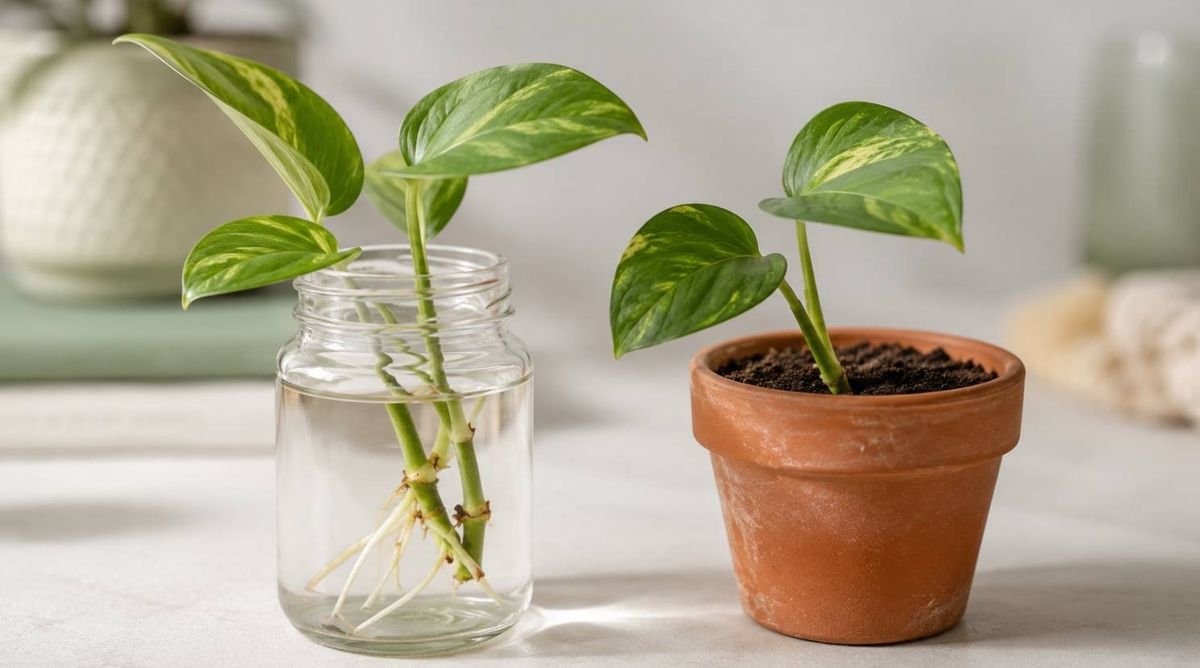
Ask ten plant people whether to root cuttings in water or soil and you'll get ten confident, contradictory answers. The truth is less dramatic: both work, both are used constantly, and the "better" one depends on the plant and what you want from it. Let's clear up why they're different and how to pick.
The one difference that matters
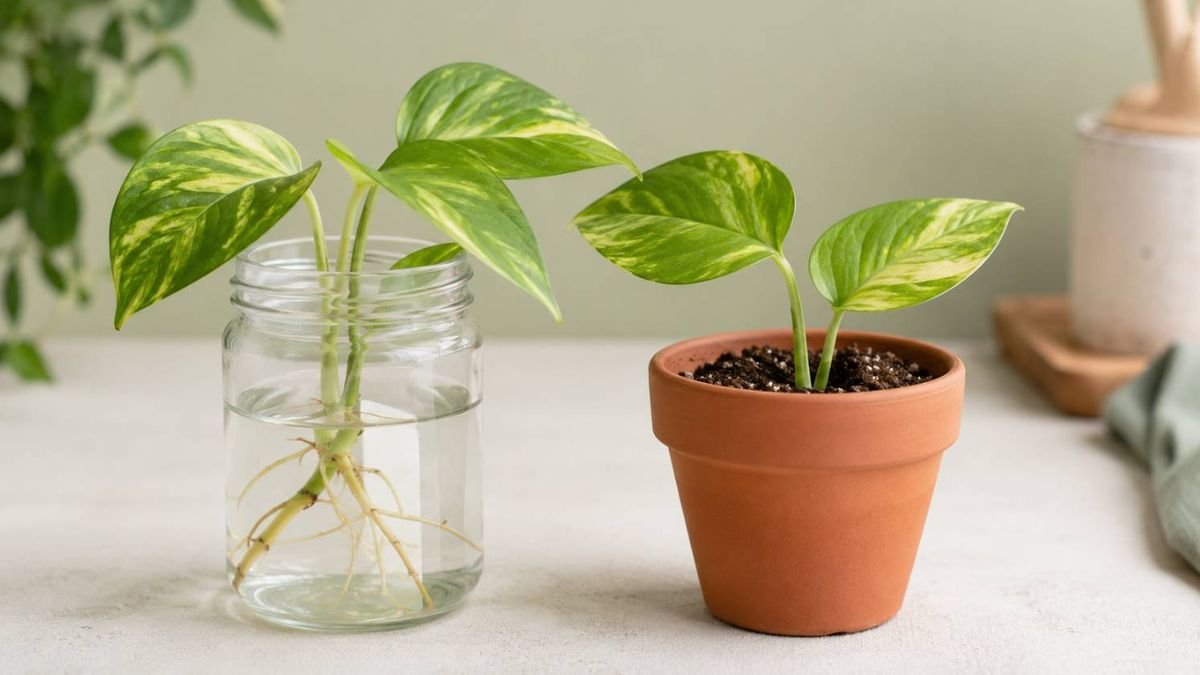
Here's the insight that makes everything else click. A cutting grows roots suited to wherever it's rooting. In water, it makes soft, hair-like water roots optimised to absorb oxygen and nutrients from liquid. In soil, it makes tougher, branching soil roots built to grip a chunky medium and pull moisture from it.
Those two root types aren't interchangeable. Water roots don't instantly work in soil, which is why a jar-rooted cutting sometimes sulks for a week or two after potting while it grows a fresh set of soil-adapted roots. It's not doing anything wrong — it's just re-tooling. Understanding that single fact explains most of the "help, my cutting stalled" questions we get.
Water propagation: pros and cons
Water is the beginner favourite for good reason. You can see the roots as they form, which turns propagation from a guessing game into something you can actually watch and learn from.
- Wins: visible progress, near-zero cost, nothing to buy, easy to spot rot early, genuinely satisfying to look at.
- Trade-offs: the transition to soil can be bumpy, water needs regular changing, and some plants (especially chunky-rooted or rot-prone ones) simply don't love it.
Soil propagation: pros and cons
Soil skips the middle step. The cutting grows soil-adapted roots from the start, so there's no transition later — you plant it and it just carries on.
- Wins: no transplant shock, sturdier roots, often a stronger long-term plant, and less fiddling once it's set up.
- Trade-offs: you can't see what's happening, so problems hide until you tug and feel resistance; it needs consistent moisture; and it's easier to accidentally rot a cutting by overwatering.
A light, airy medium makes soil propagation far more reliable — dense potting soil holds too much water and suffocates a young cutting. We share a simple three-ingredient blend in a propagation soil mix that works.
Side-by-side comparison
| Factor | Water | Soil |
|---|---|---|
| See the roots? | Yes | No |
| Transplant shock | Possible | Rare |
| Cost / setup | Free | Needs mix + pot |
| Maintenance | Change water often | Keep evenly moist |
| Best for beginners | Excellent | Good |
| Long-term root strength | Weaker at first | Stronger |
So which should you use?
A simple rule of thumb:
- Choose water if you're new, if you want to watch and learn, or for easy trailing plants like pothos, philodendron and tradescantia.
- Choose soil for plants prone to rot, for cuttings you want to plant once and forget, or when you're propagating a big batch and don't want to babysit jars.
Plenty of growers do both: root in water until they see the first roots (for reassurance), then pot up early while the roots are short and adapt more easily. If you go that route, timing matters — see when to move a cutting from water to soil.
How to soil-propagate
If you want to skip water entirely, the process is nearly as simple.
Take a good cutting
Cut just below a node, keeping two or three leaves. The node is where roots form, so make sure your cutting has one.
Pot into a light mix
Insert the cutting into a moist, airy propagation mix so the node is buried. Firm it gently so it stands up.
Keep it humid and bright
Bright indirect light, evenly moist (never soggy) medium, and a little humidity all speed things along. A clear bag or box over the pot helps stubborn cuttings.
Test gently after a few weeks
A light tug that meets resistance means roots have taken hold. Then treat it like a normal young plant.
Common questions
Is water or soil propagation faster?
Water often shows visible roots sooner, which feels faster. But soil-rooted cuttings skip the transition step, so from cutting to a settled plant the overall time is usually similar. For realistic timings by plant, see how long propagation takes.
Can I move a cutting from water to soil?
Yes, and most people do. Move it while the water roots are still short — about one to two inches — so it adapts more easily, and keep the soil consistently moist for the first couple of weeks.
Which method causes less transplant shock?
Soil, because the cutting never has to swap root types. Water-rooted cuttings can droop briefly after potting while they grow soil roots, which is normal and temporary.
Do I need rooting hormone for either?
No, not for easy plants. It can nudge slow, woody cuttings in soil, but it's optional in both methods. We cover when it actually earns its place in our rooting hormone breakdown.